Sound & Interaction — Allosphere · Reaction-Diffusion · Spatialization
↗ RepositoryThe Dance of Laplace
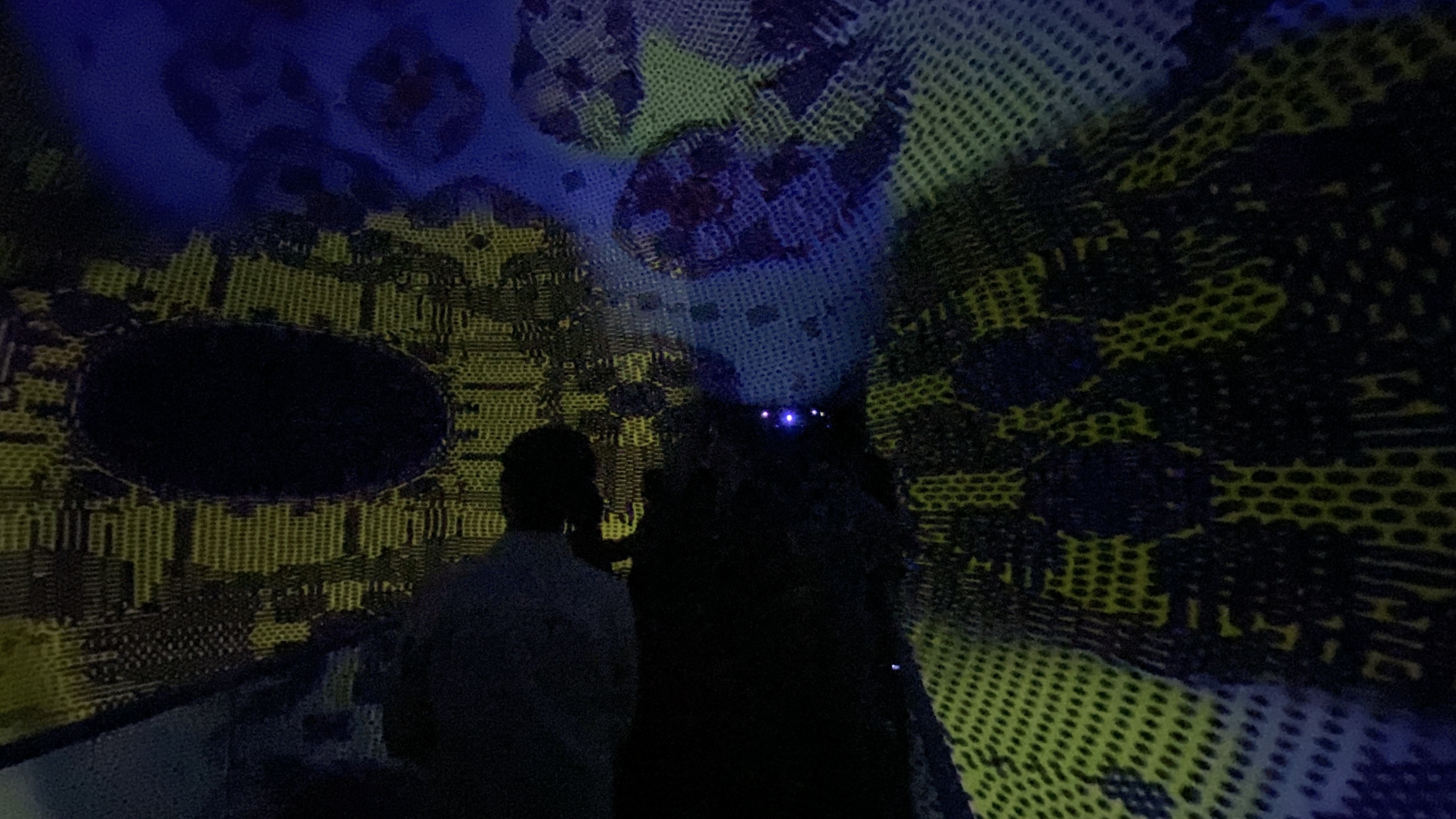
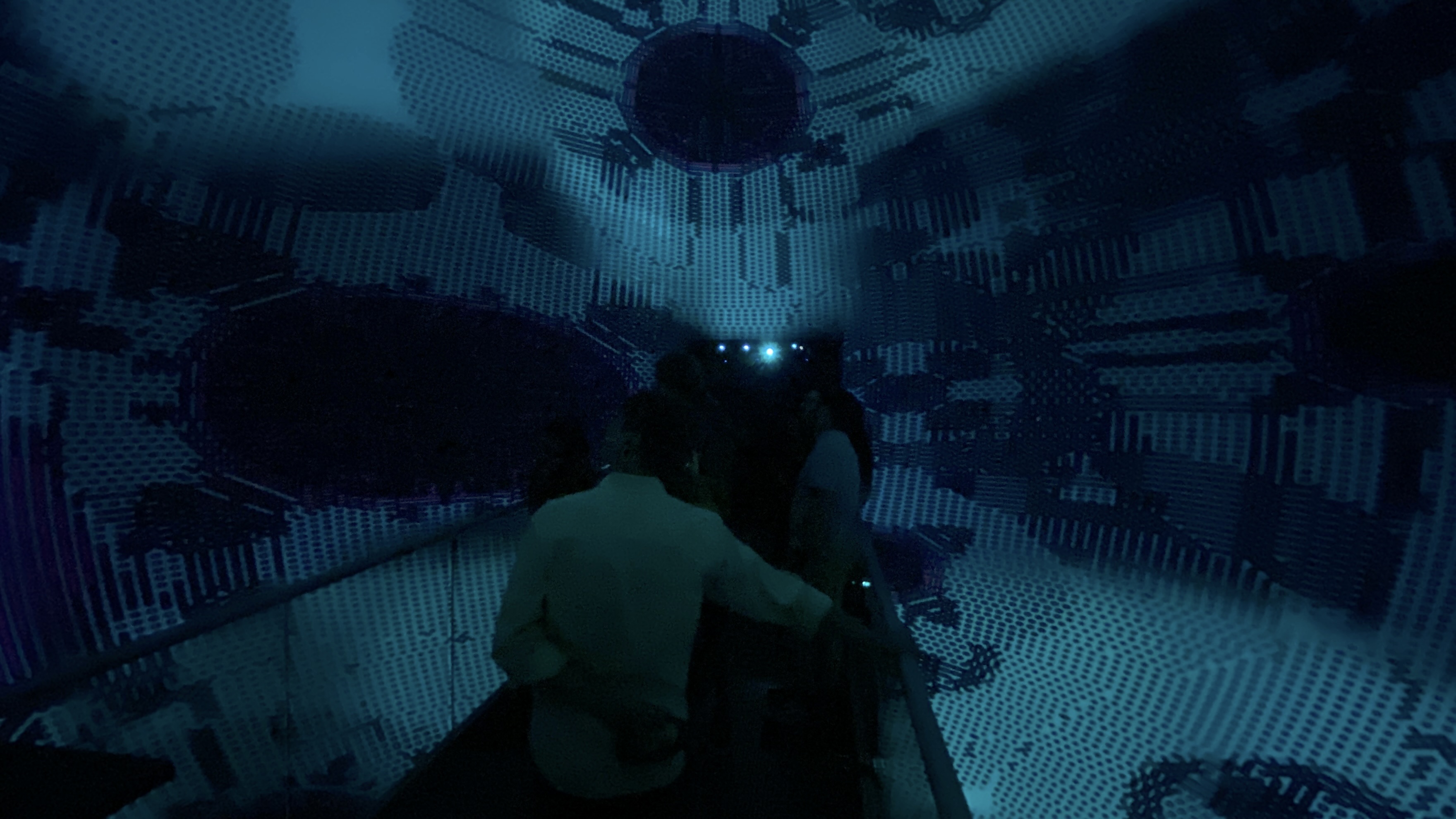
Gray-Scott reaction-diffusion simulation projected inside the AlloSphere
C++AllolibAbletonGLSL
Video
Concept
Driven by my interest in nature, I discovered that Reaction-Diffusion is one of the most well-known algorithms for simulating organic behavior. Then I wondered: what if I added another iteration — a Bi-Laplacian extension? That became the core of the piece: a texture generated on a sphere and displayed inside the AlloSphere for the End of Year Show 2026.
Technical Detail
- —Ping-pong FBO — two RGBA32F framebuffers swap read/write roles each sub-step. No CPU round-trips.
- —Gray-Scott model with a Bi-Laplacian convolution applied to increase the morphological complexity of the piece.
- —Nala Sinephro — Continuum 1, separated into three stems: Others, Bass, Drums. Each loaded and routed into its own bus with different spatialization equations.
Learnings
- —I learned that complex mathematical concepts extend far beyond research or engineering — they carry real expressive potential in artistic contexts.
- —Dealing with a complex system like the AlloSphere requires a lot of iteration. LLMs can help you deal with Media Art projects, but you need to understand the code and the environment to be able to execute a high-quality project.
- —Audio spatialization is a complex topic. The Allosphere has 54 speakers, but the spatialization algorithms I implemented only made use of 8–16 at a time. The piece would have benefited from more complex spatialization techniques that could leverage the full array.
