Data & Science — Frontend · Data viz · Climate tech · Product leadership
VestaESG
A SaaS platform built to replace the manual carbon accounting work

Context
After co-founding Realiza and seeing the inefficiencies in the accounting process — chasing departments for spreadsheets, cleaning inconsistent formats, aggregating by hand, then spending weeks on verification before a report could be issued — I knew exactly what was broken. VestaESG is what I would have wanted on day one.
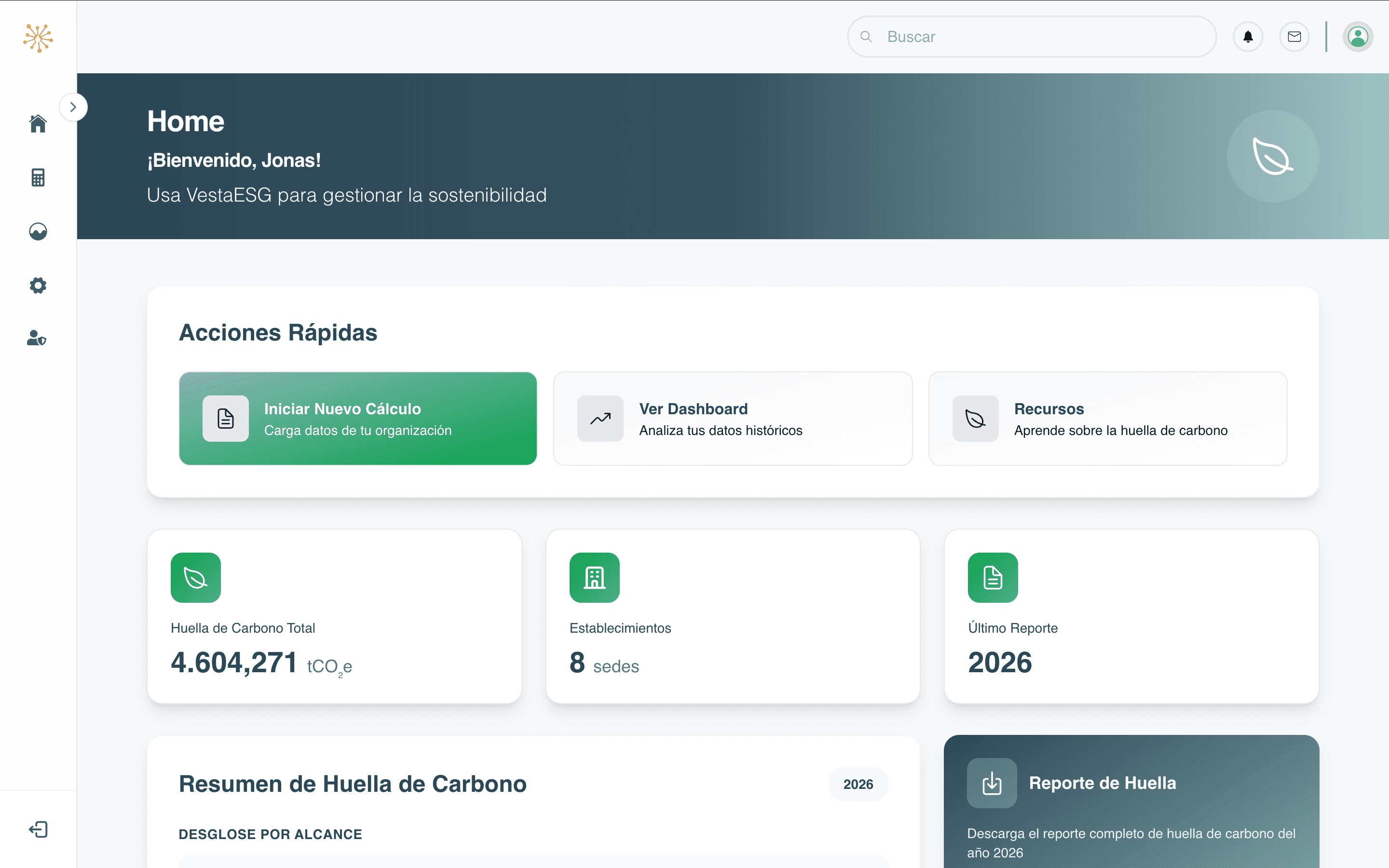
Built within Realiza, it is a SaaS platform designed for Chilean higher education institutions to measure, report, and manage their environmental impact — aligned with GHG Protocol, Huella Chile, and the sustainability certification requirements of the Chilean higher education system. Because I had spent years inside the problem, I was positioned to define both the product and the data model, not just manage the build. I coordinated the commercial manager and backend developers, and built the frontend myself.
Technical Detail
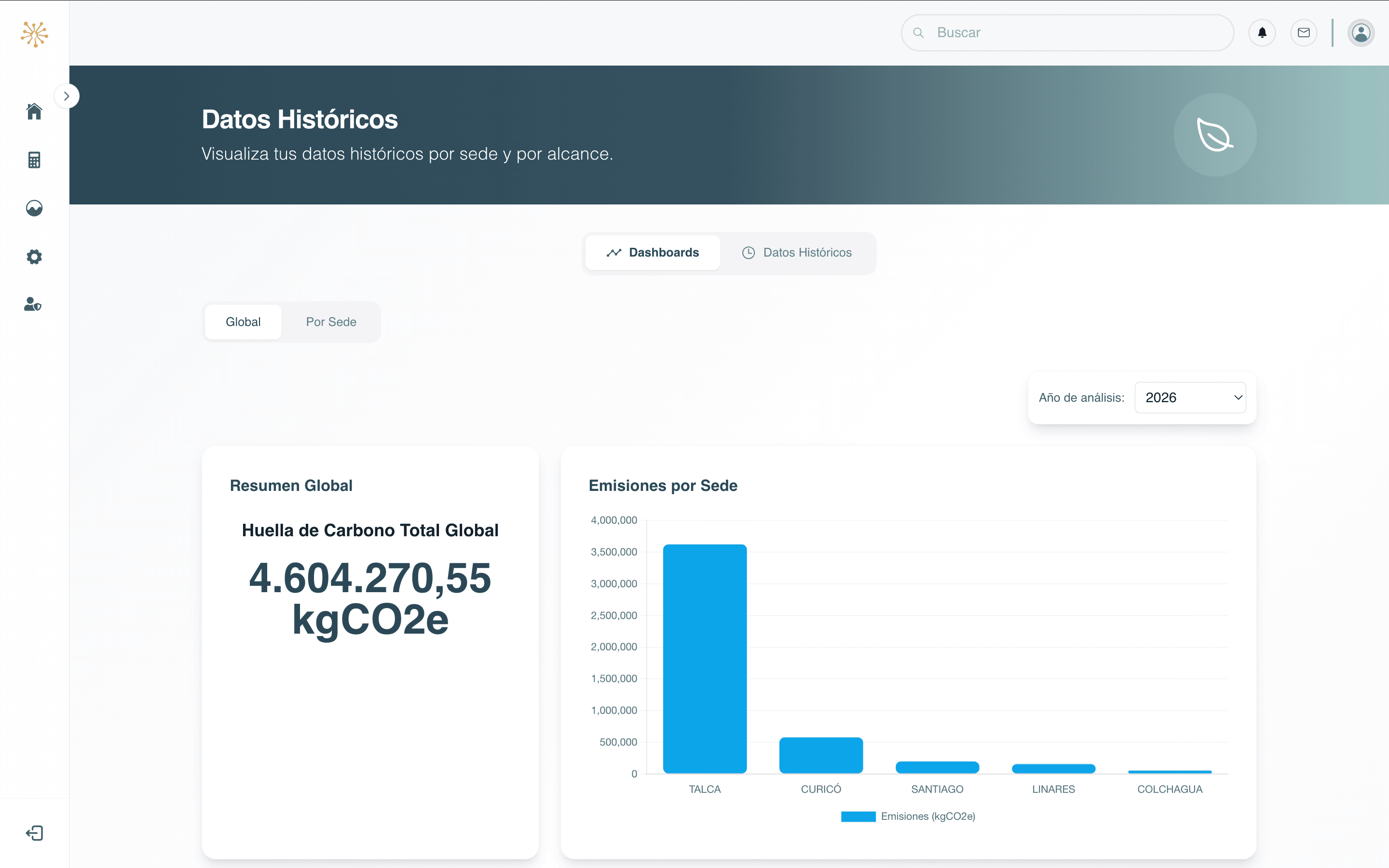
- —Frontend: React 18 + Tailwind CSS + Chart.js + Zustand. Dashboard-first design — each department sees its own energy, water, and waste data; administrators see aggregated institutional totals and trend lines across campuses.
- —Backend: FastAPI (Python 3.12) with a three-layer middleware stack for authentication and others. I wasn't in charge of this layer, but I had to learn and understand it deeply to design the frontend and coordinate the team effectively.
- —Database: PostgreSQL 16 with a schema designed for GHG Protocol Scopes 1/2/3 and Huella Chile output formats.
- —Excel upload wizard: 3-step frontend flow (select, preview, confirm). This allow the user to create an automated reporting pipeline.
Learnings
- —Building a product to solve your own problem is an advantage, but also a trap: you design for yourself and forget that users do not share your mental model of the data. The hardest UX decisions came from unlearning assumptions I had as a carbon accounting expert.
- —Knowing the domain deeply meant I could skip the discovery phase that most product teams spend months on — I could go straight to designing around constraints like Scope 3 data fragmentation and Huella Chile verification requirements.
- —Frontend development for data-heavy applications is a UX problem as much as a coding problem. Showing many indicators without overwhelming the user requires real design judgment, not just component architecture.
